Get Marketing Insights First
Subscribe to receive actionable strategies, growth tips, and industry insights delivered straight to your inbox.

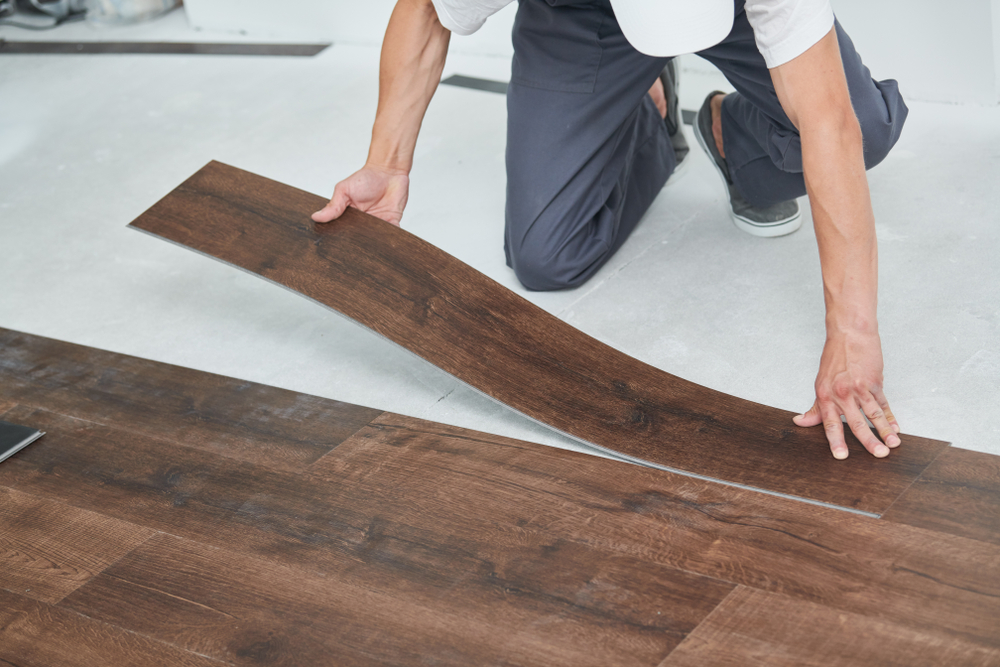
Scuffed laminate, dated tile, or builder-grade carpet can undercut an otherwise great apartment, but you don’t need permission to change how the floor looks — just the right layering strategy and a realistic sense of how much coverage you actually need before you spend money on a fix that’s bigger than the problem.
QUICK ANSWER
The most effective way to cover ugly apartment floors is a large area rug sized to anchor your main furniture grouping, paired with a rug pad to keep it from sliding on hard surfaces. For truly damaged or dated flooring, interlocking foam or peel-and-stick vinyl tiles laid over — not attached to — the existing floor provide full-coverage that lifts up completely at move-out. Most rooms only need one of these two approaches, not both, so start with the rug and escalate only if it isn’t enough.
An undersized rug is the single biggest reason a floor-covering attempt looks accidental instead of intentional. Size the rug so at least the front legs of your major furniture rest on it.
A rug pad isn’t optional on hard flooring — it prevents slipping and adds a layer of cushioning that makes the rug feel more substantial.
When in doubt, size up rather than down; a slightly oversized rug reads as a deliberate design choice, while an undersized one almost always reads as an afterthought, no matter how nice the rug itself is.
Interlocking peel-and-stick or click-together vinyl tiles rest on top of the existing floor without adhesive to the subfloor, making them fully removable. They’re a strong option when the damage is too extensive for a rug alone to hide.
Order a few extra tiles beyond your measured square footage — cutting around doorways and cabinets uses up more material than most people initially budget for, and running short mid-installation is a common frustration.
Two smaller rugs, layered or placed in adjoining zones, can cover more damaged floor area than a single rug while staying within a reasonable budget.
A jute or sisal base rug topped with a smaller patterned rug is a popular layering combination that reads as designed rather than improvised.
If the floor has lingering odors under the damage, a baking soda treatment or enzyme cleaner before you cover it prevents smells from resurfacing later. Covering a problem doesn’t solve it if moisture is still trapped underneath.
Let any treated area dry completely before laying down a rug or tile system — sealing in residual moisture is one of the fastest ways to create a mold problem you’ll have to deal with later.
QUICK TAKEAWAYS
Ugly flooring is one of the most fixable problems in a rental — the right rug, tile, or layering combination can make the original floor almost disappear from view. Start with the simplest option that solves your specific problem before reaching for a full-room fix, and reassess after living with it for a week or two.
Get damage-free décor ideas, budget tips, and exclusive finds delivered to your inbox.
We respect your privacy. Unsubscribe anytime.
