Get Marketing Insights First
Subscribe to receive actionable strategies, growth tips, and industry insights delivered straight to your inbox.

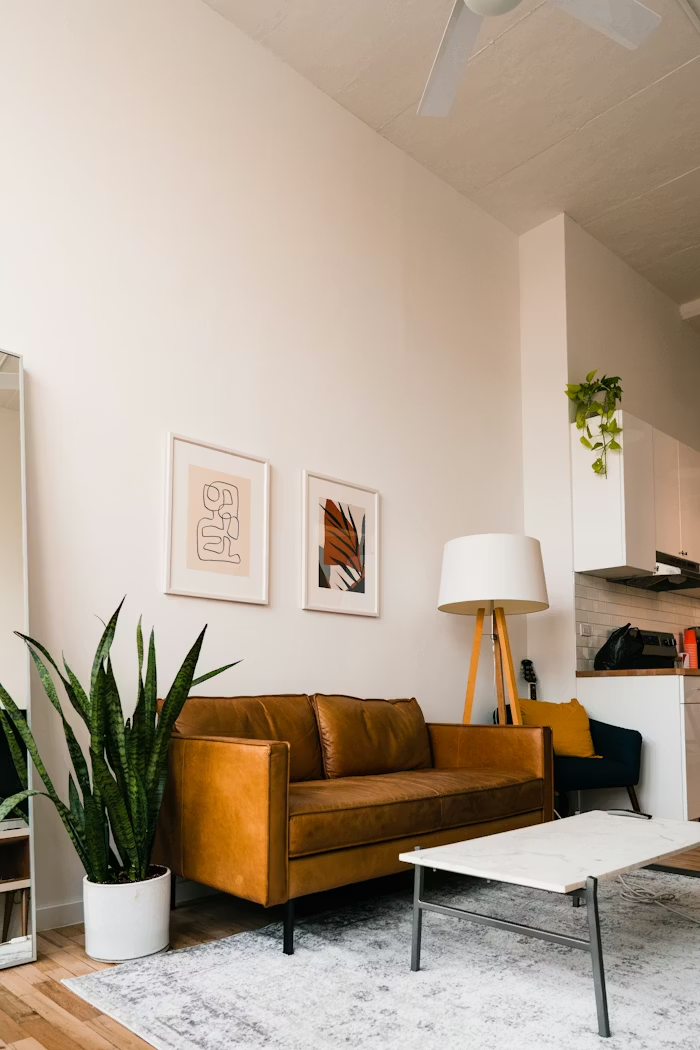
Picture hanging is where most renters get nervous about their security deposit — and understandably so, since a single misplaced nail can mean a patch-and-paint job later. A handful of damage-free methods make it possible to hang a full gallery wall with nothing to repair when you move out, and once you know which product fits which situation, the whole process becomes routine rather than something to dread.
QUICK ANSWER
The most reliable damage-free picture hanging methods are weight-rated adhesive hooks, tension rod ledges, and command-style strip systems designed specifically for frames. Each holds without nails or screws and releases cleanly, so the wall looks untouched once the piece comes down — the key is matching the product’s weight rating to your frame and prepping the wall surface before you apply anything. Most failures come from skipping the prep step, not from the products themselves, so a few extra minutes up front pays off later.
Adhesive picture hooks work like traditional wall hooks but bond with a foam strip instead of a nail. They’re rated by weight, come in small to large sizes, and are the closest damage-free equivalent to a standard nail-and-hook setup.
Multi-hook sets that share a single wide adhesive base are worth considering for heavier frames, since they distribute weight across a larger bonded surface area.
Look for hooks specifically labeled for picture or frame use rather than general-purpose hooks — the angle and depth of the hook itself is designed to keep a frame flush against the wall instead of tilting forward.
A slim tension rod mounted between two walls, or a floating ledge that rests on adhesive strips, creates a shelf you can lean multiple frames against. It’s especially useful for narrow hallways where a true gallery wall would otherwise mean a dozen individual holes.
Ledges also make it easy to rotate art seasonally, since nothing is permanently mounted — you can swap pieces in and out as often as you like without any new holes or adhesive.
Foam-backed strips designed for picture frames pair a matching pair on the frame and the wall, similar to velcro. They hold securely for frames up to a moderate weight and pull off cleanly with the manufacturer’s recommended stretch-release technique.
Buy a few extra strips beyond what the frame calls for — they’re inexpensive, and a slightly overbuilt hold is cheaper than a fallen frame.
Lay the arrangement out on the floor first, then trace each frame onto painter’s tape on the wall to test the layout before committing any adhesive. This turns a permanent-feeling project into something you can adjust as many times as you want.
Photograph the taped layout before removing it so you have a reference to rebuild from if you ever take the whole arrangement down and reinstall it later.
QUICK TAKEAWAYS
With the right combination of adhesive hooks, ledges, and frame strips, a full gallery wall is well within reach — no drill, no patching compound, and nothing to explain at your move-out walkthrough. Start small, confirm the hold on your heaviest piece, and expand the wall from there once you’re confident in how it performs over the first week or two.
Get damage-free décor ideas, budget tips, and exclusive finds delivered to your inbox.
We respect your privacy. Unsubscribe anytime.
