Get Marketing Insights First
Subscribe to receive actionable strategies, growth tips, and industry insights delivered straight to your inbox.

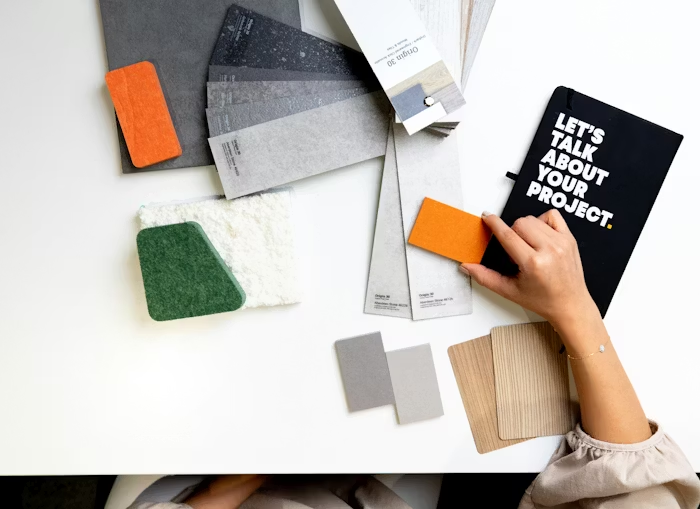
Peel-and-stick wallpaper has become the go-to move for renters who want a real design statement without a paint roller or a landlord’s sign-off, but not all products labeled “removable” actually behave that way once they’re on a wall for a full lease term, so choosing carefully upfront matters more than people expect.
QUICK ANSWER
Peel-and-stick wallpaper is a self-adhesive vinyl or fabric material that applies directly to a clean wall and removes without paint damage when you follow the manufacturer’s instructions. The best results come from prepping the wall properly, working in manageable sections, and choosing a genuinely repositionable product rather than a permanent adhesive marketed loosely as “peel-and-stick.” Reading reviews specifically about removal, not just application, is the best way to avoid a bad surprise later when it’s time to move out.
Clean the wall with soap and water, let it dry fully, and skip application on freshly painted walls — most manufacturers recommend waiting at least a month after painting for the finish to fully cure.
A smooth, primed wall holds peel-and-stick paper far better than a textured or glossy one, so check your wall type before you buy.
If your walls have any texture at all, order a small sample roll and test a section before committing to a full order — textured walls are the leading cause of peel-and-stick projects that don’t hold for the length of a lease.
Cut and apply one panel at a time rather than unrolling the full length at once. A squeegee or credit card smooths air bubbles out as you go, working from the center toward the edges.
Two people make this job considerably easier than one — one person can hold and align the top of the panel while the other smooths from the bottom, which keeps the whole thing straight.
A single accent wall, the inside of a closet, or a stair riser lets you test how a pattern behaves in your specific space before committing to a full room.
Accent applications also mean less material to remove later, which matters if you’re not sure how long you’ll be in the apartment or whether your taste in pattern will hold up over time.
Peel from a top corner slowly and at a low angle, rather than pulling straight out from the wall. If any adhesive residue remains, warm water and a plastic scraper usually lift it without harming the paint underneath.
QUICK TAKEAWAYS
Done well, peel-and-stick wallpaper looks indistinguishable from the real thing — and unlike paint, it comes down in an afternoon with nothing left to patch. Test a small section first, and a full room becomes a much lower-risk project once you know exactly how the product behaves on your specific walls.
Get damage-free décor ideas, budget tips, and exclusive finds delivered to your inbox.
We respect your privacy. Unsubscribe anytime.
