Get Marketing Insights First
Subscribe to receive actionable strategies, growth tips, and industry insights delivered straight to your inbox.

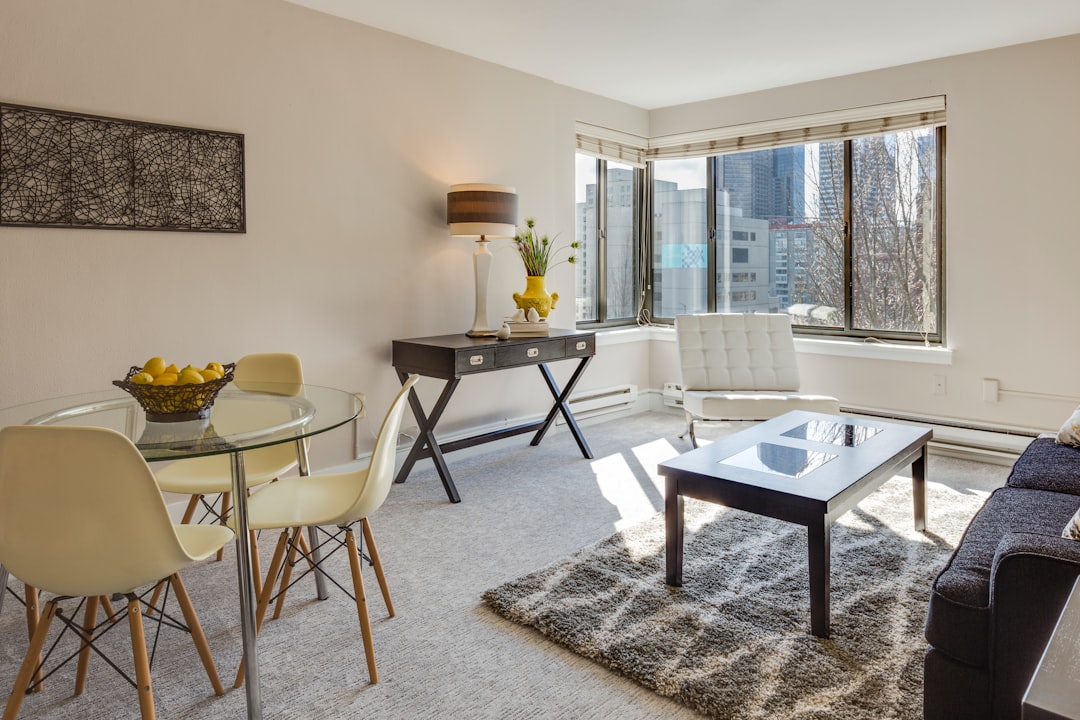
A small rental living room works best when you design around its proportions: one sofa against the longest wall, a rug large enough for all furniture legs to rest on, and storage that goes vertical rather than horizontal.
Quick Answer
A small rental living room works when you design it around its constraints rather than against them. That means one large sofa instead of two small ones, a rug that extends under the furniture instead of floating in the center, vertical storage that draws the eye upward, and rigorous editing of what stays in the room. The proportions and palette matter more than square footage.
In This Article
Quick Takeaways
The sofa is the most consequential piece of furniture in any living room, and its placement sets every other decision. In small rental living rooms, the most common mistake is centering the sofa in the room as an island, leaving walkway space all around it. This feels spatially generous but actually makes the room feel smaller because it fragments the floor plan into awkward peripheral zones that aren’t large enough to use.
Instead, push the sofa flush against the longest wall. This concentrates the seating zone, liberates the majority of the floor as a single unified space, and allows you to place a coffee table and side tables without creating a navigation obstacle course. The result is a room that reads larger because its proportions are resolved rather than undecided.

The counterintuitive truth about small rooms: a sofa that is slightly too large for a room often reads better than one that is clearly too small. An undersized sofa makes the room feel like a waiting room. A well-proportioned or even slightly generous sofa anchors the room and signals that the space is a real living room, not a holding zone.
The guideline: your sofa should occupy between 50% and 67% of the wall it is placed against. If your wall is 12 feet wide and you place an 8-foot sofa, that is a ratio of 67% — appropriate. A 6-foot sofa on the same wall at 50% — workable but on the lighter end. A 4-foot love seat at 33% — the room will feel unresolved regardless of what else you do.
An area rug does three things simultaneously in a small living room: it defines the zone, adds warmth underfoot and visually, and anchors the furniture into a coherent grouping. The most common rug mistake in small rooms is buying a rug that is too small — a rug that floats in the center of the furniture arrangement like an afterthought rather than a foundation.
The rule: in a living room arrangement, all front legs of all seating pieces should sit on the rug. This does not mean the entire sofa needs to be on the rug — front legs on, back legs off is the standard approach — but none of the furniture should be floating completely off the rug on all four legs. A rug that is too small to accommodate even front legs is simply too small for the room.

In a small living room, the most underused dimension is height. Most renters think horizontally — where does the sofa go, where does the TV stand go, where does the coffee table go — and never look up. But the vertical wall space between the top of the furniture and the ceiling is genuinely free real estate, and using it for storage or visual interest transforms how the room reads.
Tall, narrow bookshelves — the kind that run floor to ceiling — are the most effective single piece of furniture you can add to a small living room. They provide substantial storage, draw the eye upward (which makes ceilings feel higher), and give the room a sense of intentionality that a shorter, wider shelf unit cannot. IKEA’s BILLY series runs floor to ceiling with the right extension unit and is designed to be used exactly this way.
The styling of a tall bookshelf in a small living room is as important as its presence. Overstuffed shelves with no visual breathing room feel chaotic in a small space. The approach that photographs best and feels most considered: fill roughly 70% of the shelf with items, leave 30% as negative space. Group objects in clusters of odd numbers — three, five, seven. Alternate books with objects. Vary the height within each shelf.
Natural light is the single greatest asset a small living room can have, and the best rental decisions you can make involve maximizing it rather than filtering it. If your rental has windows, keep them unobstructed by furniture. If you have the option to hang curtains, hang them as high as possible (at ceiling height if there’s hardware to support it) and as wide as the wall allows — this makes the window itself read larger and draws more light into the room.
Mirrors do two things in small rooms: they reflect light, and they create a perception of depth. A large mirror placed on the wall opposite or adjacent to a window reflects the window’s light back into the room and creates the impression that the room continues beyond the wall. This optical effect is not a gimmick — it genuinely changes how a room reads. A full-length mirror leaned against a wall achieves the same effect without any installation.
Every piece of furniture in a small living room should earn its place by serving at least one functional purpose, and ideally two. This is not a design philosophy — it is a spatial necessity. A purely decorative accent chair that no one sits in, a coffee table with no storage, a side table that only holds a lamp — in a small living room, these pieces are a spatial debt you cannot afford to carry.
Before purchasing a single new piece for a small living room, spend an afternoon editing what is already there. Remove every item that does not belong in the living room: stray clothing, bags, papers, items waiting to be returned somewhere else, anything that migrated from another room. Then assess what remains.
The questions to ask of every piece: Does it work? Does it fit the scale of the room? Is it the right proportion? Is it earning its floor footprint? A small living room that contains only pieces that answer yes to all four of these questions — even if those pieces are inexpensive or imperfect — will feel more resolved than a room full of aspirational pieces that don’t quite fit.
The most common items that do not earn their place in small living rooms: oversized armchairs purchased optimistically, accent tables that serve no function, artwork hung at the wrong height, floor lamps placed where they block natural traffic patterns, and decorative baskets that have become de facto clutter storage. Removing any of these immediately improves the room’s spatial quality.
A sofa makes sense in any living room above approximately 10 feet in its longest dimension. Below that threshold, two chairs facing each other with a shared small table often works better. The key is that at least one piece of seating should have sofa-length proportions to anchor the room.
Layer a large area rug over the carpet. Choose a flatweave rug with a pattern or texture that draws the eye rather than a solid that will fight with the carpet color beneath. The rug covers the carpet, defines the zone, and shifts the entire visual register of the room. Keep the rug edges from curling with rug tape sold for carpet-on-carpet use.
Yes, but sizing is critical. Choose a round or oval table rather than rectangular — round tables feel less space-consuming because they have no corners to navigate around. A table for two that expands to four with a drop-leaf design is the most spatially efficient option. Place it against a wall when not in use to free the central floor area.
Light, warm neutrals on the largest surfaces (walls, sofa, rug) make rooms read larger because they reflect light rather than absorbing it. A tonal approach — multiple shades of the same neutral — is more spacious-feeling than high contrast. Avoid very dark walls in small rooms unless there is significant natural light to compensate.
Get damage-free décor ideas, budget tips, and exclusive finds delivered to your inbox.
We respect your privacy. Unsubscribe anytime.