Get Marketing Insights First
Subscribe to receive actionable strategies, growth tips, and industry insights delivered straight to your inbox.

Flooring is often the single biggest visual liability in a rental — dated laminate, worn vinyl, or builder-grade carpet can undercut an otherwise well-decorated apartment. Fortunately, temporary flooring solutions have matured well beyond a basic area rug, and several now hold up for the full length of a standard lease without any noticeable wear, giving renters real options that simply didn’t exist a decade ago.
QUICK ANSWER
The best temporary flooring options for renters include interlocking peel-and-stick vinyl tiles, floating foam or cork tiles, and large-format area rugs, all of which rest on top of the existing floor without adhesive to the subfloor. The right choice depends on the scale of the problem — a rug solves cosmetic issues in a single zone, while floating tile systems can transform an entire room’s flooring for the length of a lease. Matching the system to the specific problem saves both money and installation time, so start small and escalate only if the smaller fix doesn’t fully solve it.
IN THIS ARTICLE
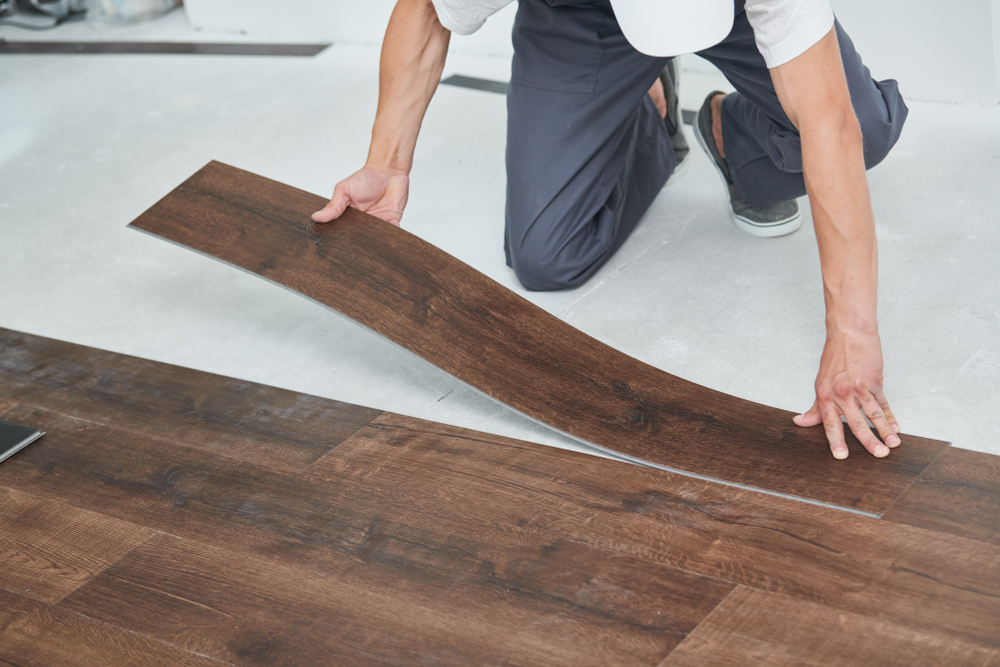
Peel-and-stick vinyl tile applies directly over most existing hard flooring and mimics the look of real hardwood, stone, or ceramic tile at a fraction of the cost and effort. Quality varies significantly between products, so prioritize options explicitly rated for temporary or rental use.
Proper subfloor prep — clean, dry, and free of major texture — makes the difference between tiles that hold for a full lease term and ones that lift within months of installation.
Lay out a full row dry, without adhesive backing removed, before committing to a starting point — this catches pattern or sizing issues before they become permanent across the whole floor.
Buy roughly ten percent more material than your measured square footage. Cuts around cabinets, doorways, and vents waste more tile than most first-time installers expect, and matching a discontinued print later is difficult.
Interlocking foam or cork tiles click together without any adhesive at all, resting entirely on top of the existing floor. They’re especially useful over damaged or uneven flooring where adhesive-backed products might not bond reliably.
Cork specifically adds warmth and sound dampening that foam alternatives don’t, making it a strong choice for upstairs units in multi-family buildings where noise complaints are a real concern.
Because these tiles simply lift apart, they’re also the easiest system on this list to partially replace — a single damaged tile can be swapped without disturbing the rest of the floor.
For cosmetic issues rather than structural damage, a properly sized area rug remains the simplest solution. Extending the rug at least a few inches beyond your main furniture grouping keeps it from reading as an afterthought.
A quality rug pad underneath also protects the flooring beneath it, which matters if part of your goal is preserving the original floor’s condition for your move-out inspection at the end of the lease.
Carpet tiles offer a soft, warm alternative to vinyl or foam, clicking together in a modular grid that’s easy to replace individual sections of if one area wears out or stains. They’re particularly well suited to home offices or bedrooms where softness matters more than durability.
Because each tile is independent, a single stained or damaged section can be swapped out without redoing the entire floor, which is a real advantage over a full broadloom carpet or a single large rug.
Larger rooms often benefit from combining a floating tile base with a rug layered on top in the primary seating or sleeping zone, giving you both full-room coverage and an added layer of texture and warmth where you’ll notice it most.
Transition strips designed for floating floors can bridge between two different systems in adjoining rooms, keeping the overall look cohesive rather than visibly patched together room to room.
Photograph the original flooring condition before installing any temporary system, and store all removed materials or packaging until your lease ends. Most floating and peel-and-stick systems lift cleanly, but budget an afternoon for removal rather than assuming it will be instant.
QUICK TAKEAWAYS
Temporary flooring has come a long way from a single mismatched rug — with the right system, a rental’s worst floor can look and feel like a genuine upgrade for the length of your lease, and none of it puts your deposit at risk. Match the fix to the actual problem, and you’ll get most of the impact without overspending on a system your specific floor never needed.
Get damage-free décor ideas, budget tips, and exclusive finds delivered to your inbox.
We respect your privacy. Unsubscribe anytime.